
Dive Brief:
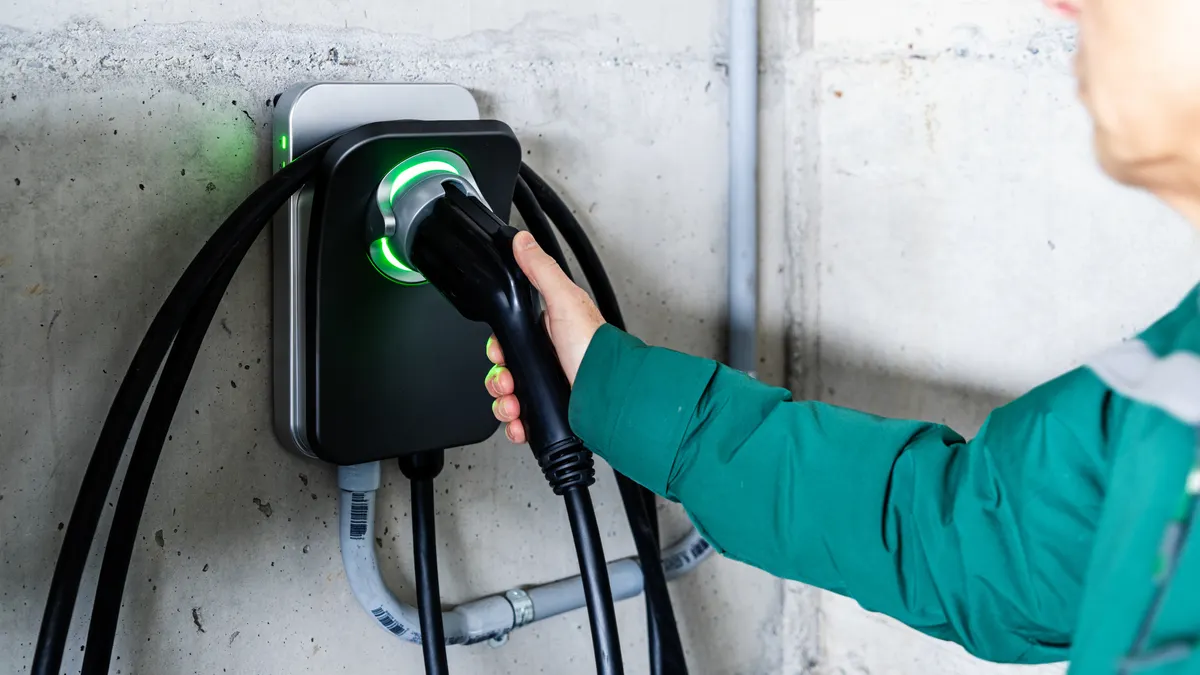
- Puget Sound Energy began testing vehicle-to-home technology in its service territory last month in the first bidirectional electric vehicle charging pilot of its kind in Washington state, the utility said on March 18.
- Puget Sound Energy said it’s running the test in partnership with Ford, Kia, EV charging equipment provider Wallbox and ChargeScape, a vehicle-grid integration platform. Participating EV owners will use their vehicles’ batteries to provide backup home power “while simultaneously supporting grid reliability during peak demand periods,” the utility said.
- In an email, ChargeScape CEO Joseph Vellone called the test a “technology demonstration” that will run through the first quarter of 2027. It includes three Ford F-150 Lightning and two Kia EV9 vehicles, he said.
Dive Insight:
Puget Sound Energy “will continue to explore opportunities to expand the demonstration scope as other [auto manufacturers’] and charging partners’ bidirectional capabilities advance,” Vellone said.
The utility said the demonstration will test two use cases. The first is time-of-use optimization, where participating vehicles charge during cheaper off-peak periods and discharge during higher-priced peak periods to reduce their owners’ electricity bills. The second is demand response, where Puget Sound Energy calls on the vehicles to help stabilize the grid by discharging during high-demand periods.
Active managed charging, where utilities or other intermediaries use software to control power flows to and from plugged-in EVs, can reduce peak charging demand by 50% or more and significantly reduce the associated system costs, according to a January study commissioned by EnergyHub. The study relied on a cohort of 58 drivers in Washington.
Using EV batteries for distributed energy storage also aligns with Puget Sound Energy’s clean energy goals, the utility said.
Though most of its sales already come from clean sources, Puget Sound Energy has identified demand response as a key lever for integrating more carbon-free power. In 2023, it announced a partnership with Autogrid — now part of Uplight — to deploy 100 MW of virtual power plant capacity within two years. More recently, it inked a deal with BrightNight and Cordelia Power to purchase power from a 200 MW/800 MWh battery facility that a utility spokesperson said would help alleviate grid congestion and integrate more clean energy when it comes online, likely next year.
As for the vehicle-to-home demonstration, Vellone said Puget Sound Energy will use its technical results and feedback from participants to “inform its future product development and deployment strategy.” That could include an expansion of the bidirectional charging program, which would require a filing with the Washington Utilities and Transportation Commission, he said.
The WUTC cleared Puget Sound Energy in 2023 to run “limited-scale” EV technology demonstrations to advance its energy transition and transportation electrification plans.
Washington has one of the country’s most ambitious frameworks for electric vehicle adoption. It’s one of about a dozen states to adopt California’s Advanced Clean Cars II road map, which requires 100% of new light-duty vehicles sold in 2035 to meet zero-emissions standards. A state law passed in 2022 set a nonbinding target of 2030 for new vehicle sales to be 100% electric.
Recent sales trends suggest Washington will have a difficult time meeting the earlier target, according to an analysis from the Washington Policy Center, a free-market think tank. Sales data from the Alliance for Automotive Innovation, an automaker-backed trade group, shows EV sales growth in Washington stalling out in 2025 after brisk growth in 2024, consistent with national trends.