UPDATE: March 11, 2026: A U.S. District Court judge on Friday ordered the Federal Emergency Management Agency to take the necessary steps to reverse its termination of $4.5 billion in Building Resilient Infrastructure and Communities Program funding.
The order was in response to a motion filed last month by a coalition of 22 states and the District of Columbia asking the U.S. District Court of Massachusetts to enforce its December order prohibiting FEMA from terminating BRIC.
In his Friday order, U.S. District Judge Richard Stearns acknowledged that “staffing shortages resulting from layoffs and the current budgetary freeze” and the transition to a new Department of Homeland Security secretary following Kristi Noem’s dismissal contributed to FEMA’s delay in complying with the December order.
Stearns ordered FEMA to file a status report within two weeks outlining the steps it is taking to reverse its termination of the BRIC program and issue 2025 and 2026 notices of funding opportunity. FEMA must issue a NOFO for fiscal year 2024 in compliance with the Infrastructure Investment and Jobs Act within 21 days of the order, Stearns ruled.
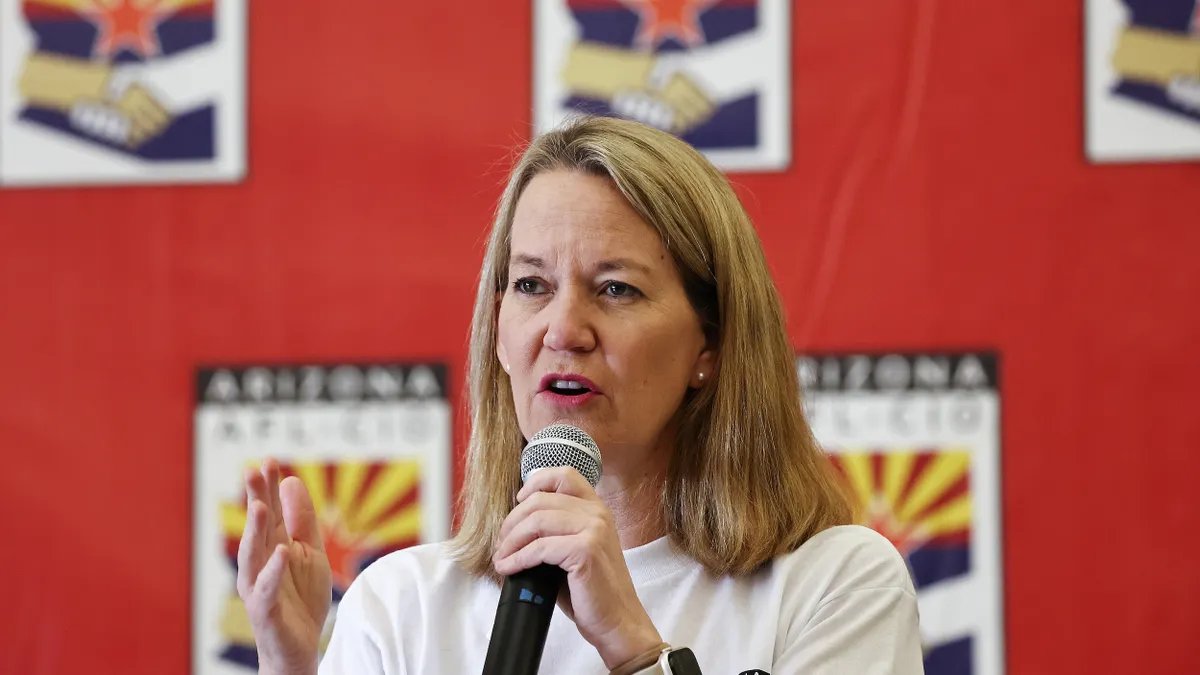
“Today’s order is a reminder that the law is not optional — even for the federal government,” stated Kris Mayes, attorney general for Arizona, one of states that secured the court order.
Dive Brief:
-
A coalition of 22 states and the District of Columbia filed a motion Tuesday asking the U.S. District Court of Massachusetts to enforce its December order prohibiting the Federal Emergency Management Agency from terminating the Building Resilient Infrastructure and Communities program.
- In response to a lawsuit filed by the attorneys general on July 16, the District Court of Massachusetts ruled Dec. 11 that FEMA’s termination of the BRIC program was unlawful and ordered the agency to restore the funding. Two months later, the federal government has “offered no indication to Plaintiff States, the public, or FEMA’s own regional offices that they have complied with the Order,” the motion filed yesterday states.
-
“Arizona communities are still waiting for flood protections that could save lives and property while the Trump Administration simply ignores a federal court order,” Arizona Attorney General Kris Mayes said in a statement. “It is a direct attack on the rule of law itself.”
Dive Insight:
In December, after the U.S. District Judge Richard Stearns ruled the Trump administration’s termination of BRIC — FEMA’s largest pre-disaster mitigation program — was unlawful, the Department of Homeland Security said in an emailed statement to Smart Cities Dive that it had not terminated the program.
“Any suggestion to the contrary is a lie,” the DHS spokesperson said. “The Biden Administration abandoned true mitigation and used BRIC as a green new deal slush fund. It’s unfortunate that an activist judge either didn’t understand that or didn’t care.”
DHS did not immediately respond to a request for comment Wednesday.
The BRIC program, which provides technical and financial assistance to states and local governments for pre-disaster hazard mitigation measures, is funded by direct congressional appropriations through the Infrastructure Investment and Jobs Act.
In April, FEMA issued a press release, which is no longer online, announcing it was ending BRIC and canceling all BRIC applications from fiscal years 2020 through 2023, the Association of State Floodplain Managers reported. Several FEMA regional administrators viewed this as the official termination of BRIC “and notified their stakeholders accordingly,” the Dec. 11 court order states.
“This is not a case about judicial encroachment on the discretionary authority of the Executive branch,” Stearns wrote in the order. “This is a case about unlawful Executive encroachment on the prerogative of Congress to appropriate funds for a specific and compelling purpose, and no more than that.”
In Tuesday’s motion asking the court to enforce the order, the states said FEMA’s continued denial of their ability to access funding leaves “state emergency management agencies and local municipalities scrambling to fill funding gaps and preserve contracts and partnerships” and facing “the loss of an urgently needed program ‘designed to protect against natural disasters and save lives.’”
Arizona, California, Colorado, Connecticut, Delaware, the District of Columbia, Illinois, Maine, Maryland, Massachusetts, Michigan, Minnesota, New Jersey, New Mexico, New York, North Carolina, Oregon, Rhode Island, Vermont, Wisconsin and Washington, along with the Kentucky Gov. Andy Beshear and Pennsylvania Gov. Josh Shapiro, are listed as plaintiffs in the Feb. 17 motion.